
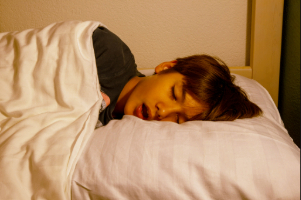
Some people assume that only adults can develop sleep apnea, but unfortunately, this isn’t the case. While it’s uncommon, the fact of the matter is that even children can suffer from sleep-disordered breathing. As a parent, it’s up to you to ensure that your little one is able to get the quality rest they need. Thus, it’s worth taking the time to learn as much as possible about sleep apnea in children – including what can cause it, what it looks like, and what treatments are available.
What Causes Sleep Apnea in Children?
Sleep apnea is a sleep disorder where an individual’s breathing repeatedly stops and restarts. In most cases, sleep apnea is the result of the airway becoming blocked in some manner; this is referred to as obstructive sleep apnea, or OSA for short.
Your child could potentially suffer from OSA if the muscles in the back of their throat become too relaxed while they’re asleep. The disorder could also be a consequence of enlarged tonsils or adenoids. Other significant risk factors include family history, a larger-than-average tongue, and certain medical conditions such as cerebral palsy.
What are the Symptoms of Sleep Apnea in Children?
If your child has sleep apnea, you may notice the following warning signs:
- Frequent snoring.
- Notable pauses in their breathing while they’re asleep.
- Coughing, choking, or gasping for air.
- Morning headaches.
- Mouthbreathing.
- Poor academic performance.
- Lack of focus.
- Hyperactivity and other behavioral issues.
- Falling asleep easily at school or in the car.
Some of these symptoms may have more than one possible explanation. In order to determine whether your child really has sleep apnea, you will need to arrange for them to undergo a sleep test. You will only be able to pursue treatment once the underlying issue has been properly diagnosed by an expert.
How Can Sleep Apnea Be Treated?
There are multiple ways to address pediatric sleep apnea. Some children may benefit from wearing an oral appliance, which can help keep the airway open by holding the lower jaw in a slightly forward position. In other cases, surgery may be necessary to remove the tonsils and adenoids, which can significantly lower the risk of an airway obstruction occurring. Ultimately, the form of treatment that’s right for your child depends on the cause and severity of their sleep apnea.
Every child deserves a good night’s sleep. If you have any reason to think that your child is suffering from sleep apnea, you should act quickly. The sooner the issue is diagnosed and treated, the sooner your little one can start enjoying more restful nights again.
About the Author
At Oak Ridge Dental, we’ve been helping patients in San Ramon enjoy brighter smiles since 1985. We provide high-quality dental care to children and adults alike; you can count on us to meet your entire family’s oral health needs thanks to our wide range of services. When it comes to treating sleep apnea, we offer oral appliances that are carefully personalized for each patient. If you’re seeking sleep apnea treatment for yourself or your child, you can schedule an appointment at our practice by visiting our website, using our online booking tool, or calling (925) 735-6190.